Previous Product


Ultrasonic metal welding
Welding principle: Ultrasonic waves are emitted from the welding head and transmitted to the surface to be welded. Heat is generated between the molecules due to friction, which melts into the welded part
 Phone:400-0571-636

 Language
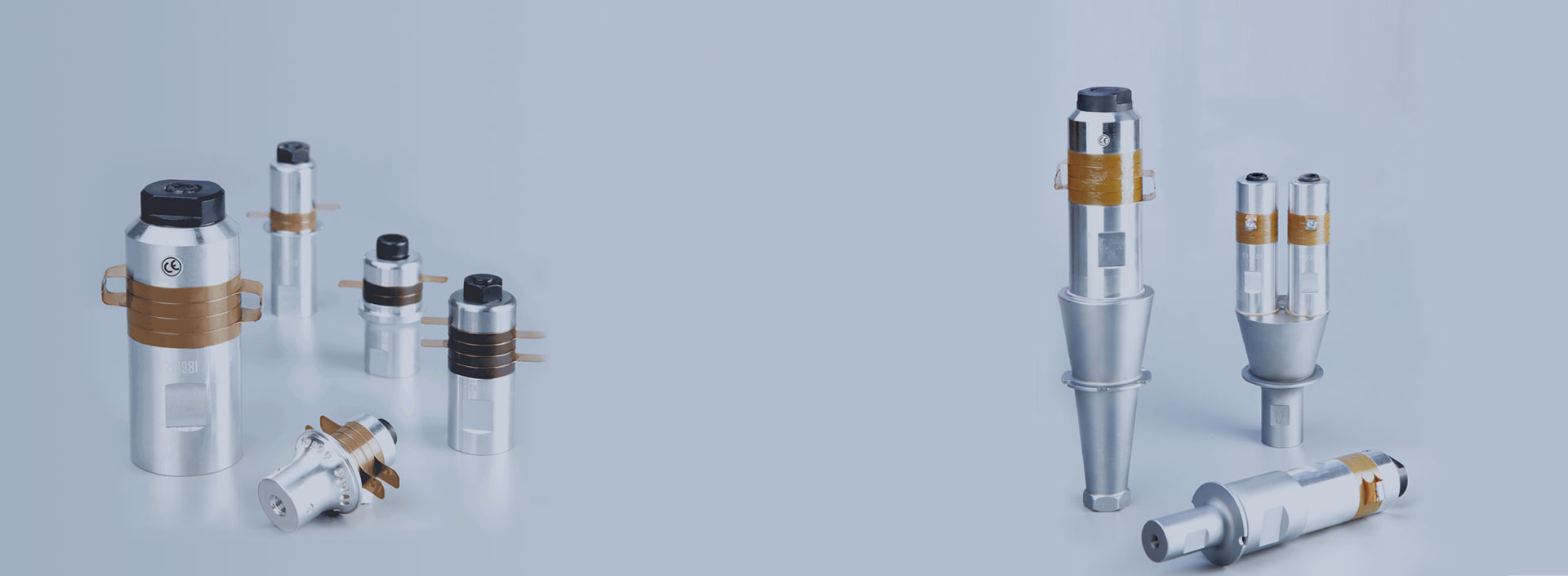
Engaged in research on ultrasound applications, development and production of high-power ultrasound transducers
Welding principle: Ultrasonic waves are emitted from the welding head and transmitted to the surface to be welded. Heat is generated between the molecules due to friction, which melts into the welded part
Phone:400-0571-636
Principle of Ultrasonic Metal Welding:
The principle of ultrasonic metal welding is a special method of connecting the same or different metals using mechanical vibration energy at ultrasonic frequencies (exceeding 16KHz). When metal is subjected to ultrasonic welding, neither current is supplied to the workpiece nor a high-temperature heat source is applied to the workpiece. Instead, under static pressure, the vibration energy of the frame is converted into frictional work, deformation energy, and limited temperature rise between the workpieces. The metallurgical bonding between joints is a solid-state welding achieved without melting the base material. Therefore, it effectively overcomes phenomena such as splashing and oxidation generated during resistance welding.
Characteristics of Ultrasonic Metal Welding:
1. Two welded objects overlap and are bonded into a solid form by ultrasonic vibration and pressure, with a short bonding time and no casting structure (rough surface) defects in the bonding part.
2. Compared with resistance welding methods, ultrasonic welding has a longer mold life, less time for mold repair and replacement, and is easier to achieve automation.
3. Ultrasonic welding can be performed between the same metal and different metals, which consumes much less energy compared to electrical welding.
4. Compared with other pressure welding, ultrasonic welding requires less pressure and less than 10% deformation, while cold pressure welding has a workpiece deformation of 40% -90%.
5. Ultrasonic welding does not require pre-treatment of the welded surface and post-treatment after welding like other welding methods.
6. Ultrasonic welding does not require external factors such as flux, metal fillers, or external heating.
7. Ultrasonic welding can reduce the temperature effect of materials to a very low level (the temperature of the welding area does not exceed 50% of the absolute melting temperature of the welded metal), thus not causing any changes in the metal structure, making it very suitable for welding applications in the electronics field.
Application scope:
Ultrasonic metal welding machine can perform single point welding, multi-point welding, and short strip welding on thin wires or sheets of non-ferrous metals such as copper, silver, aluminum, and nickel. It can be widely used for welding thyristor leads, fuse blades, electrical leads, lithium battery cells, and pole ears.
Advantages of Ultrasonic Metal Welding: Ultrasonic Welding Interfusion Table for Different Metal Materials
(1) High fusion strength
(2) Close to cold processing, workpiece not annealed, no oxidation marks;
(3) Good conductivity after welding, with extremely low or almost zero resistance coefficient
(4) Low requirements for welding metal surfaces, both oxidation and electroplating can be used for welding;
(5) Short welding time, no need for any flux, gas, or solder;
(6) Welding without sparks, environmentally friendly and safe.
Technical parameters of 20K metal welding machine
Rated power: 4000W/6000W
Resonance frequency: 20KHZ ± 400HZ
Adjustable amplitude range: 25 μ m-75 μ m
Adjustable pressure range: 0.01-0.9Mpa
Adjustable welding time range: 0.01-10s
Adjustable range of welding energy: 1~9999J
Operation interface: touch screen, Chinese interface (can be converted from Chinese to English)
Rated current: 16A
Rated voltage: AC220V
Tracheal interface diameter: Dry and clean compressed air 0.8MPa, interface diameter is 6mm
Power plug specifications: standard two-phase three wire plug
Communication protocol: Ethernet communication
Please enter the keyword you want to search
Monday to Saturday8:00-17:00
Address: No. 209-3 Dalingshan Road, Dongzhou Street, Fuyang District, Hangzhou City, Zhejiang Province
Phone:13735582388
Telephone:+86-0571-23236732
Fax:+86-0571-23236701
Email:sales@fycg.com