Ultrasonic cutting knife, also known as ultrasonic cutting machine, is a specialized ultrasonic equipment used for cutting and is one of the important categories of ultrasonic applications. The principle of ultrasonic cutting is completely different from traditional cutting. Ultrasonic cutting is the process of using the energy of an ultrasonic transducer to locally heat and melt the material being cut, in order to achieve the goal of cutting the material. So ultrasonic cutting does not require sharp edges, nor does it require a lot of pressure, and it will not cause edge breakage or damage to the material being cut. At the same time, due to the ultrasonic vibration of the cutting blade, the frictional resistance is particularly low, making it difficult for the material being cut to stick to the blade. This is particularly effective for cutting viscous and elastic materials, frozen materials such as food, rubber, or objects that are difficult to apply pressure on.
Ultrasonic cutting also has a great advantage, which is that it has a fusion effect at the cutting site while cutting, and the cutting site is perfectly sealed without causing the textile material to fly. The use of ultrasonic cutting knives can also be expanded, such as digging holes, shoveling, scraping paint, carving, etc.
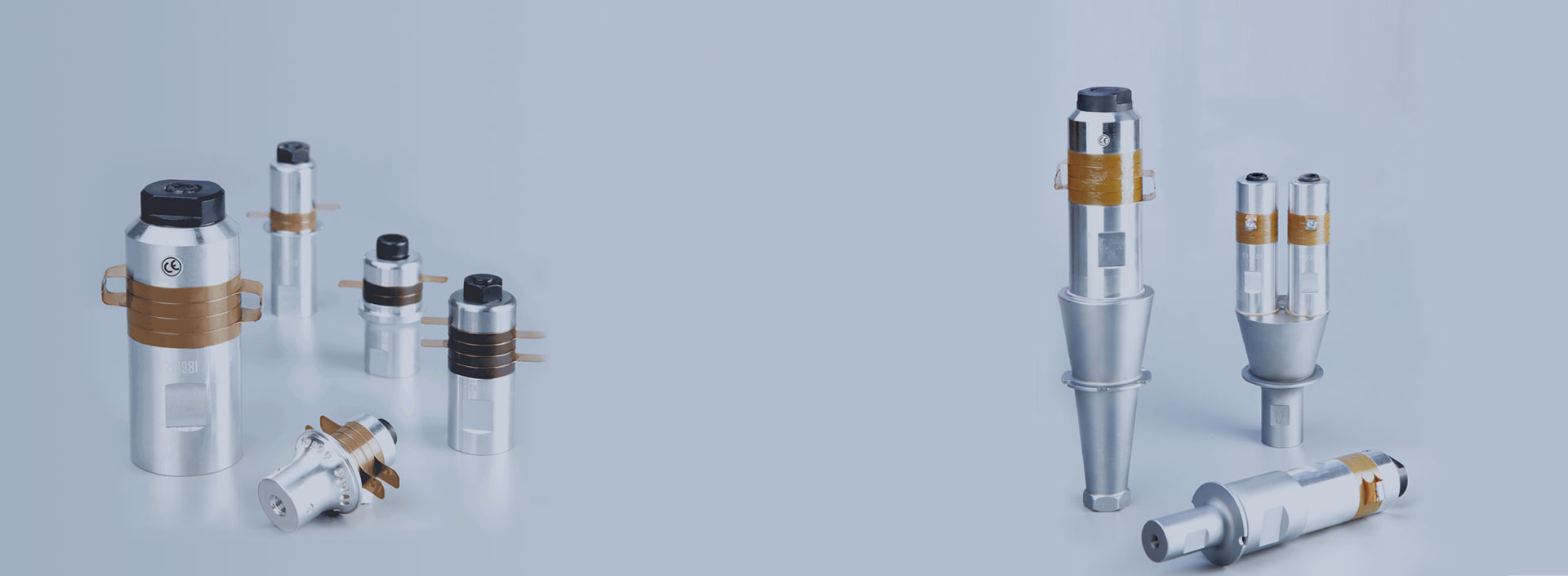
The basic components of an ultrasonic cutting knife are an ultrasonic transducer, a variable amplitude rod, a tool head (blade body), and a driving power supply. The ultrasonic driving power supply converts the mains power into high-frequency and high-voltage AC current, which is transmitted to the ultrasonic transducer. Ultrasonic transducers are actually equivalent to energy conversion devices, which can convert input electrical energy into mechanical energy, namely ultrasonic waves. Its manifestation is that the transducer moves back and forth longitudinally. The frequency of the telescopic motion is equivalent to the frequency of the high-frequency AC current supplied by the driving power supply. The function of the amplitude lever is to fix the entire ultrasonic vibration system and adjust the output amplitude of the transducer. On the one hand, the tool head (blade body) amplifies the amplitude and focuses the ultrasonic waves. On the other hand, it outputs ultrasonic waves and uses the cutting edge of the cutting blade to concentrate the ultrasonic energy into the cutting area of the material being cut. Under the action of enormous ultrasonic energy, this area instantly softens and melts, and its strength greatly decreases. At this point, as long as a small cutting force is applied, the cutting goal can be achieved.
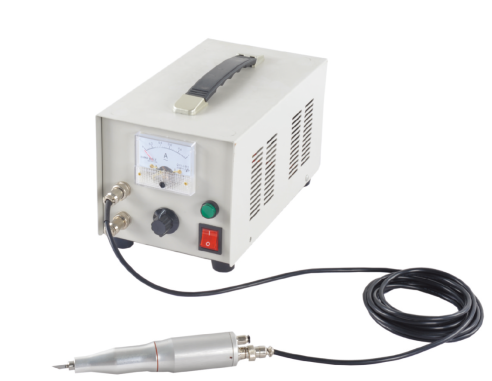
Table of cutting speed parameters for different materials
Cutting material | thickness | Cutting speed |
ABS、PE | 2mm | 4mm/s |
3mm | 2mm/s |
4mm | 1 mm/s |
PVC
| 2mm | 15mm/s |
Acrylic | 2mm | 3mm/s |
Non woven fabric | 3mm | 2mm/s |
Chloroprene rubber for rafters | 5mm | Easy to cut |
Corrugated paper | 8mm | Easy to cut |
Plywood | 2.5mm | Easy to cut |
Glass fiber resin | 1.5mm | Easy to cut |
Thick cardboard | 1.5mm | Easy to cut |
Linen (oil felt cloth) | 2mm | Easy to cut |
Ethyl carbamate | 3mm | Difficult to cut |
nylon、PP | 2mm | Difficult to cut |
3mm | Difficult to cut |
The advantages of ultrasonic cutting
1. Can be designed with air or water cooling to adapt to various working conditions and environments
2. The cutting speed is greatly improved, and the efficiency is more than 10 times higher than traditional cutting knives
3. Using high-power ultrasonic transducers as vibration components to ensure long-term stable operation
4. The variety of cutting tools is complete, and cutting tools with relevant shapes can also be customized according to customer processes
5. Can cut products that are difficult to cut with ordinary cutting tools, solving production and processing problems
6. Can install high hardness blades, replaceable cutting blades, reducing usage costs
7. Easy to install and use, with almost no changes to the original cutting process
8. High cutting accuracy and good smoothness of the cutting surface
Market application
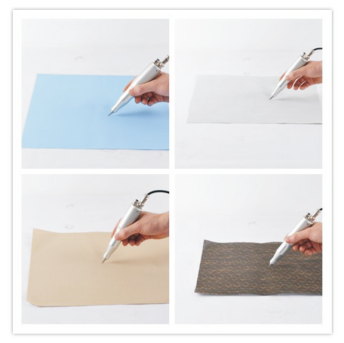
Chemical fiber fabric
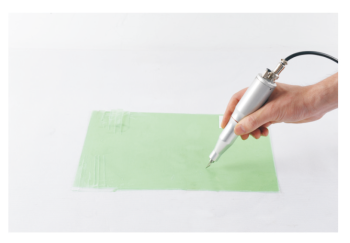
PC
Specification parameters
model
| Multi functional handheld cutting knife | Rubber cutting knife |
| frequency(KHZ) | 40 | 40 |
| Drive power supply | ZJS-100Analog Drive Power Supply | ZJS-500Analog Drive Power Supply |
External dimensions
(mm) | Drive power supply: 265L * 155W * 170H Blade body: Φ 32 * 170 | Drive power supply: 380L * 250W * T50H Blade body: 72L * 82.5W * 25.5 H |
weight
(Kg) | Drive power supply: 3.6kg Blade body: 0.2kg | Drive power supply: 11.7kg Blade body: 0.6kg |
| Scope of application | Tianran Fiber Synthetic fiber Thin plastic products (such as plastic film, phone cases, etc.) Paper and backing film of the desired type Rubber, silicone rubber Thin sheets of organic plastics such as ABS, PP, PE, etc. with a thickness of less than 2mm Various types of synthetic fabrics, etc
|
|
| Equipment features | Can replace blades, improve productivity, and reduce costs Air cooling device ensures that the handle does not overheat during continuous startup, resulting in more stable performance Compact design, lightweight, and can reduce processing fatigue With just a gentle touch, complex and precise cutting can be achieved Large output amplitude makes cutting easier | The incision is smooth, firm, and the cutting edge is accurate, without deformation, wrinkles, etc High cutting accuracy, unchanged adhesive material Good cutting surface smoothness and bonding performance Fast distance, high efficiency, and no pollution Low cost, simple operation, no oscillation sensation during cutting |
|
|
|
|


 Previous Product


 Phone:400-0571-636